
Pottery Tour
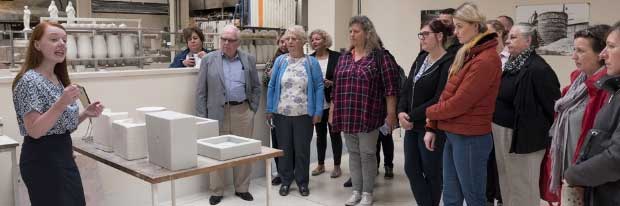
Amazingly, visitors have been coming to Belleek Pottery, since 1857. We invite you to discover the secrets that have made Belleek Pottery one of the most enduring success stories of Irish Craftmanship with a visit to its award winning 4 star visitor centre.
Experience the life and times of Ireland’s oldest pottery. Watch closely and see how the techniques developed over 160 years are still being used today, producing some of the most sought after gift and tableware in the world today.
Whilst Admission to the Visitor Centre is Free there is a small charge for the guided Pottery tour which runs every twenty minutes, (See Visitor Centre Opening Hours for Pottery tour details)
Take the Tour
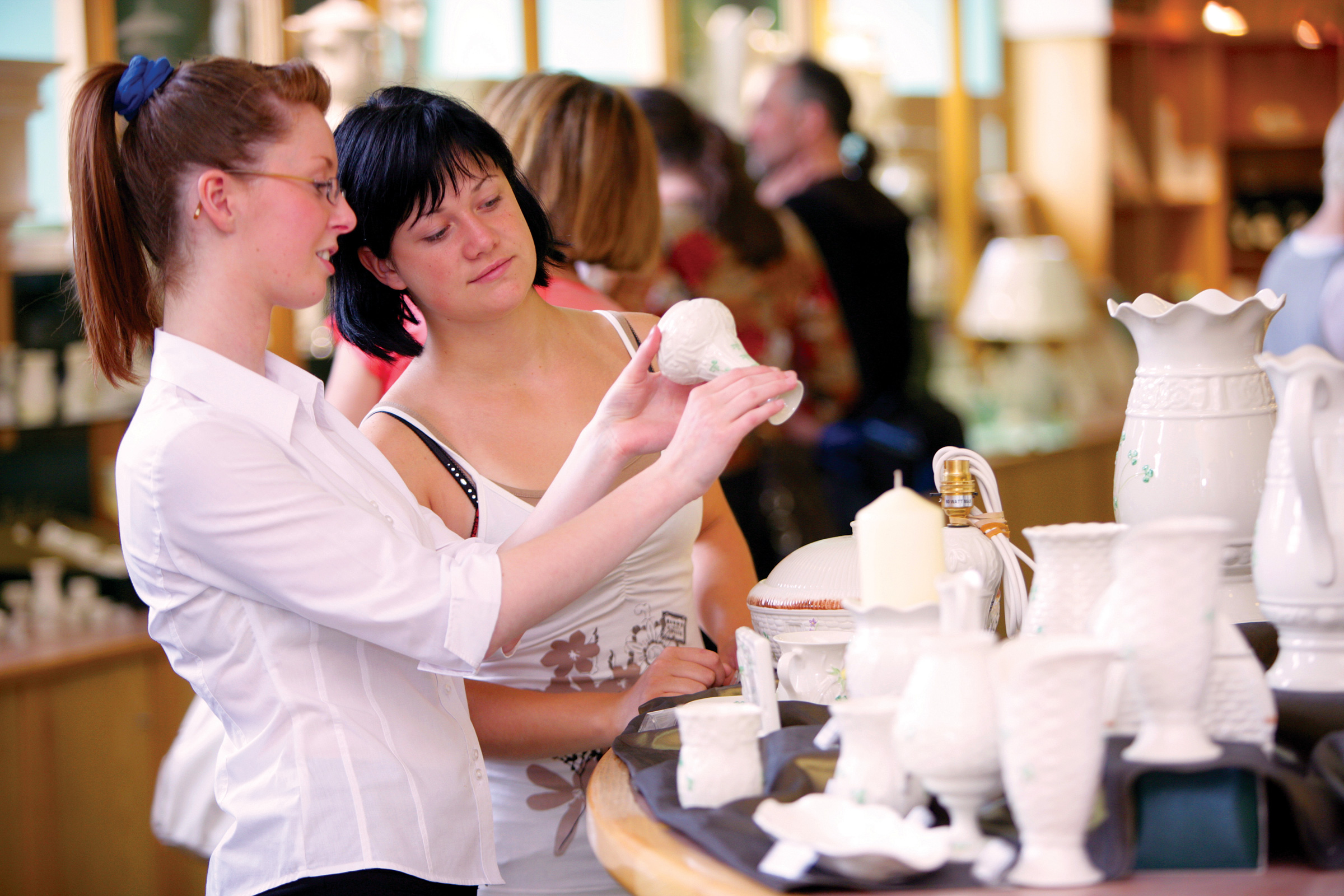
In the main reception area a large bell hangs graciously on the wall; a bell that is well over 100 years old and was first used in the Pottery to call the Pottery staff back to work after tea and dinner breaks.
The bell is used to this day but now to call together groups of our guests to join us on a magical trip to unravel the manufacturing process of our products.
The guided tour takes approximately 30 minutes and covers all of the production areas thereby offering our guests the possibility of meeting with and chatting with our craftspeople; something that we encourage.
Because the tour route was designed into the new refurbishment programme of the Pottery over the last seven years all of the viewing areas are on level ground and, therefore, provide easy access for all (in the unlikely event of someone being tired wheelchairs are provided). Unlike many other Potteries we have chosen to provide a personal guide for all groups.
The tour begins by one of our guides welcoming our guests to Belleek and explaining a little about what they are about to experience.
Mould Making
The first area to visit is Mould Making.
Once a new Belleek product design has been approved and a working drawing produced, the process moves on to mould making, this involves the creation of a product master mould that will be used to produce working moulds for each products manufacturing process.
The creation of master moulds is a very slow and meticulous procedure and is completed by hand. When craving a pattern into a new model, to complete a small piece such as an ornament can takes 2 days, with larger pieces taking weeks or even months to complete.
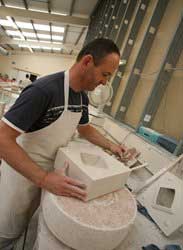
Working moulds produced from the master mould are made from plaster of paris (which is very absorbent) and are used in our casting department to produce each product body.
Casting Department
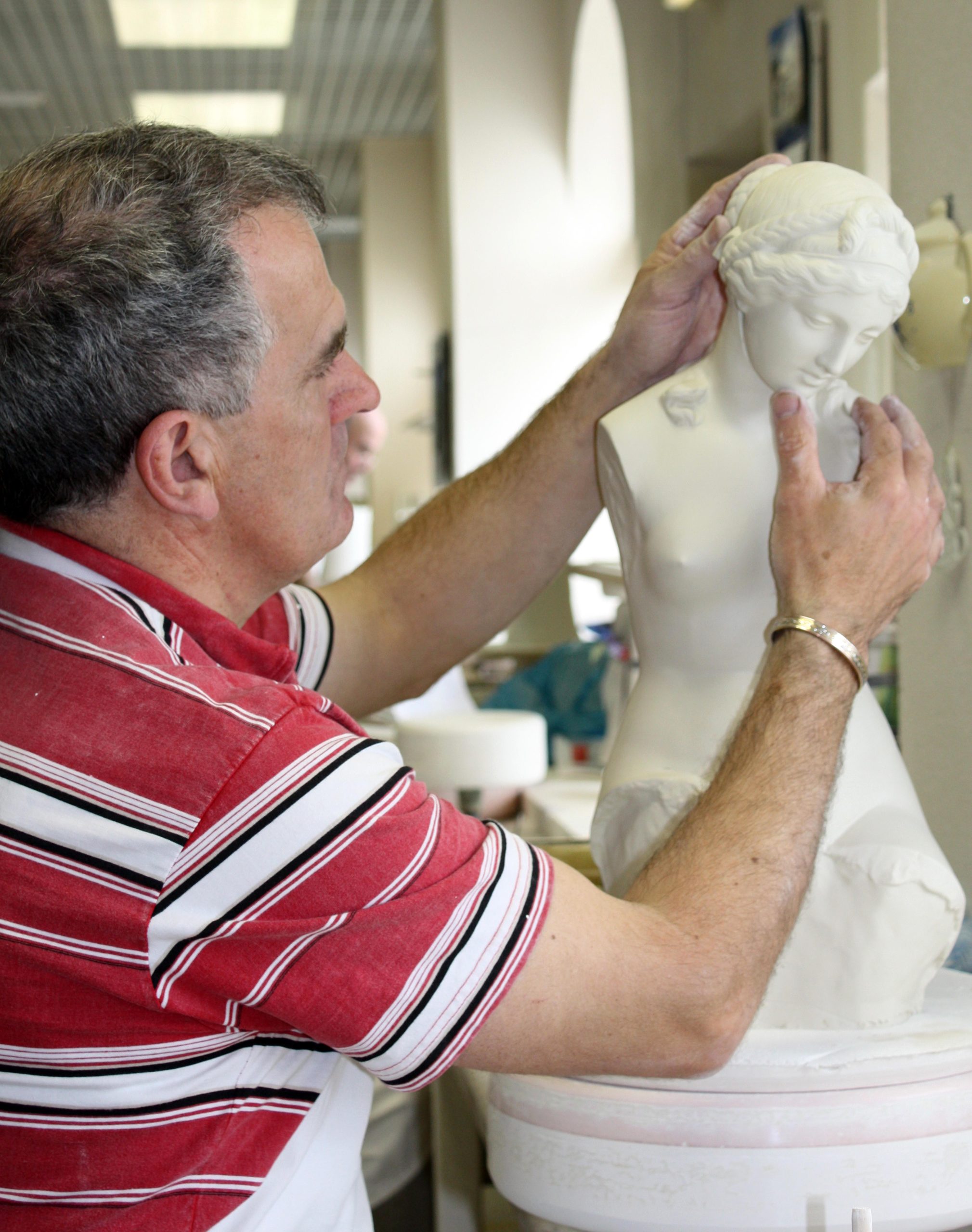
Following on from the mould making area you will be brought into the Casting Department. (See Virtual Tour). Here you will see how liquid casting slip is poured into the plaster of paris working mould and allowed to sit for two or three minutes before being emptied out.
The casting slip’s main ingredients are China Clay from Cornwall, Feldspar from Norway, Potash and Water. The craftspeople use the casting slip which is piped directly to their work stations through pipes in the ceiling.
When the excess slip is poured out the “skin” left behind on the inside will become the Belleek product. The mould is later opened and the shape removed for drying before final fettling and firing.
Once the product is removed from the mould it is known as Green Ware. At the Green ware stage some products need to be assembled, for example a Belleek teapot; at the stage the craftspeople will add the handle and spout.
All green ware products are left for 24 hours to dry; during this time the ware will become very white in colour and also very chalky and delicate to touch. The product is now known as white ware and is ready for the final fettling process before it’s first firing. The fettling process involves the removal of any seams, raw edges or excess clay, the tools used in this are squirrel hair brushes, very sharp knives and sponges.
Flowering & Basketweave Shop
Our next stop will be in the floral and basket making department for which Belleek is world famous. Here we look on in awe as our craftspeople weave the intricate strands for the baskets and painstakingly create beautiful flowers; leaf by leaf, stem by stem and petal by petal. Every piece produced in this area is truly original and no two pieces are the exact same.
The clay used here is the same as that used in the casting department except here we add Gum Arabic, this change’s the colour of the clay making it grey in colour and it also makes it more pliable to the craftspeople to work with.
For the baskets the clay is compressed through a machine called a Dod Box, the clay will be extruded through the bottom of the machine in very long spaghetti like strands, and it is these strands that are used for weaving the base and sides of each basket.
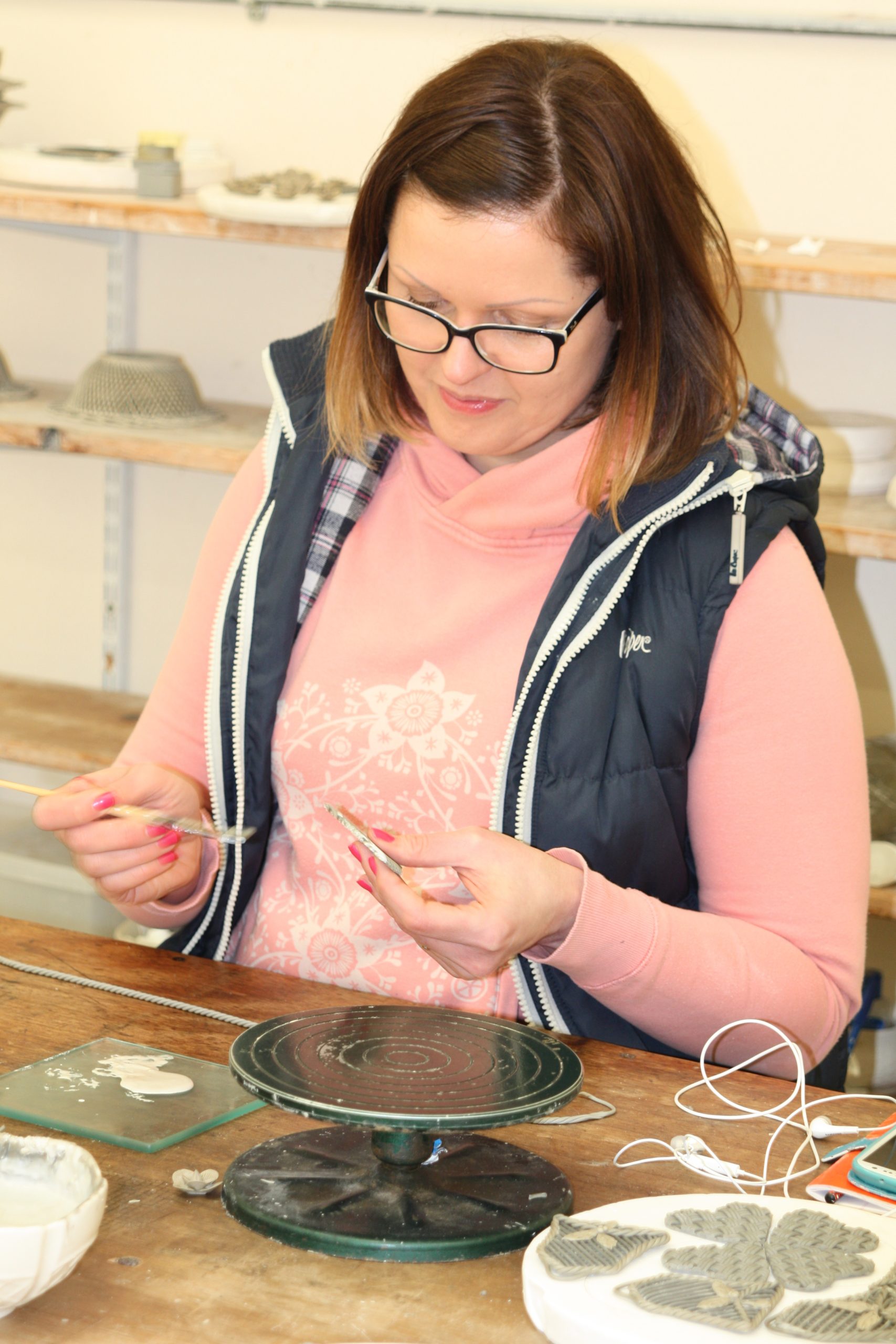
The base of each basket is hand-woven on a ceramic tile in 2, 3, or 4, strands, it is then cut out using a template to whichever size and shape of basket is required to be made. The base is then placed on top of a block mould and each basket is hand-woven individually; strands are laid on around the side of the mould in a diagonal fashion in both directions to create the basket effect.
The flowers are all hand crafted in the palm of the craftsperson’s hand, and the tools used are similar to those used many years ago; a five inch nail, flattened and smoothed at both ends a razor blade and a pin.
Kiln Area
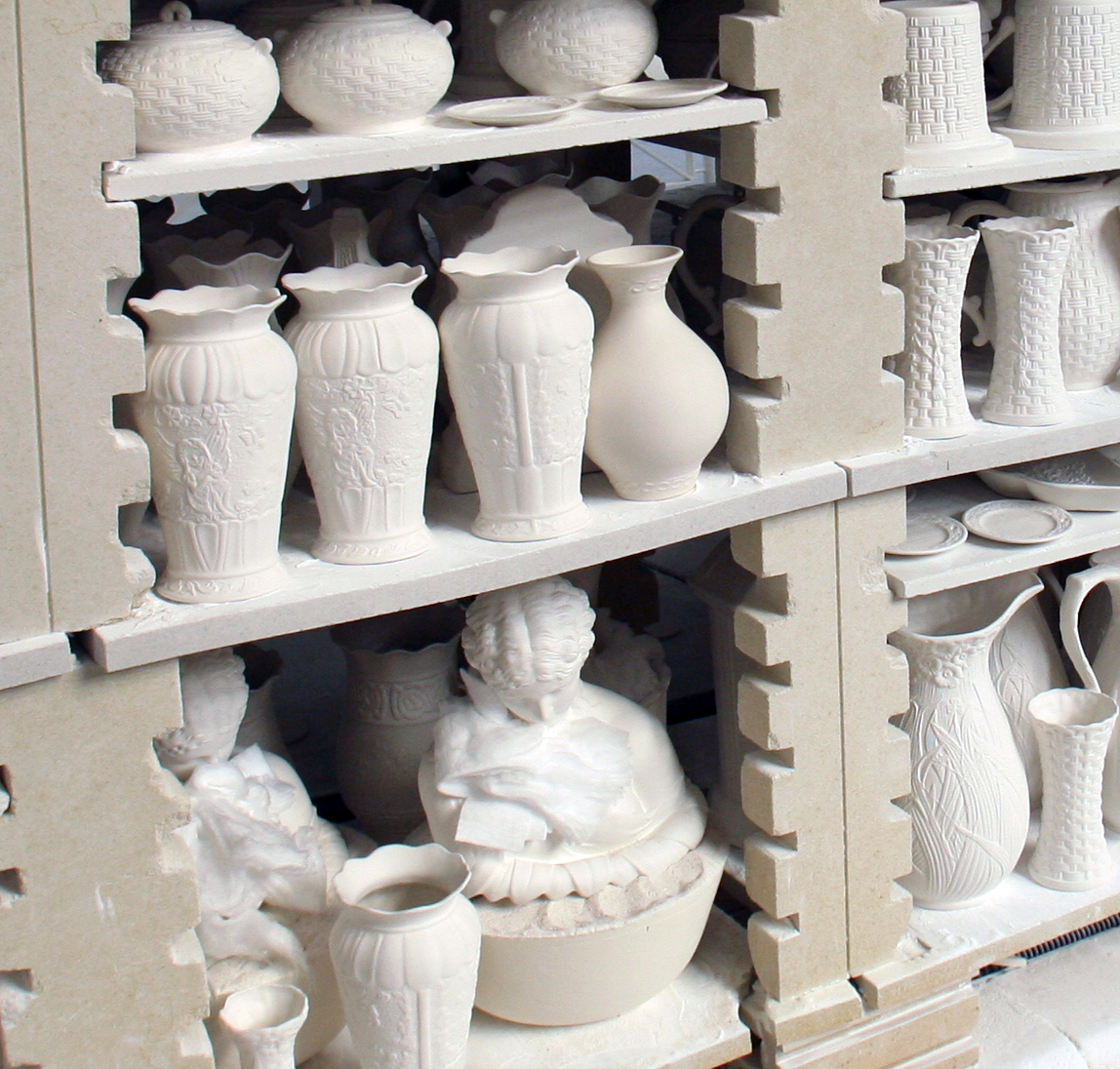
After the craftsmen have completed fettling each piece they are brought through to the kiln area to be fired. First Firing is for 24 hours at 1200 degrees centigrade during this firing there is a uniform shrinkage of 14% this is due to evaporation of water. The piece changes colour and is now known as biscuit ware. The ware then receives a first quality control check if it passes each piece is hand dipped into a liquid glaze, this is made from Borax and Frit. Frit is a very finely ground glass and Borax is a mineral. The glaze is removed from the bottom of each piece of ware otherwise it would stick to the kiln during the second firing. The second firing is for 10 hours at 1000 degrees centigrade, the piece is beginning to look more like Belleek with its creamy gloss finish.
Paint Shop
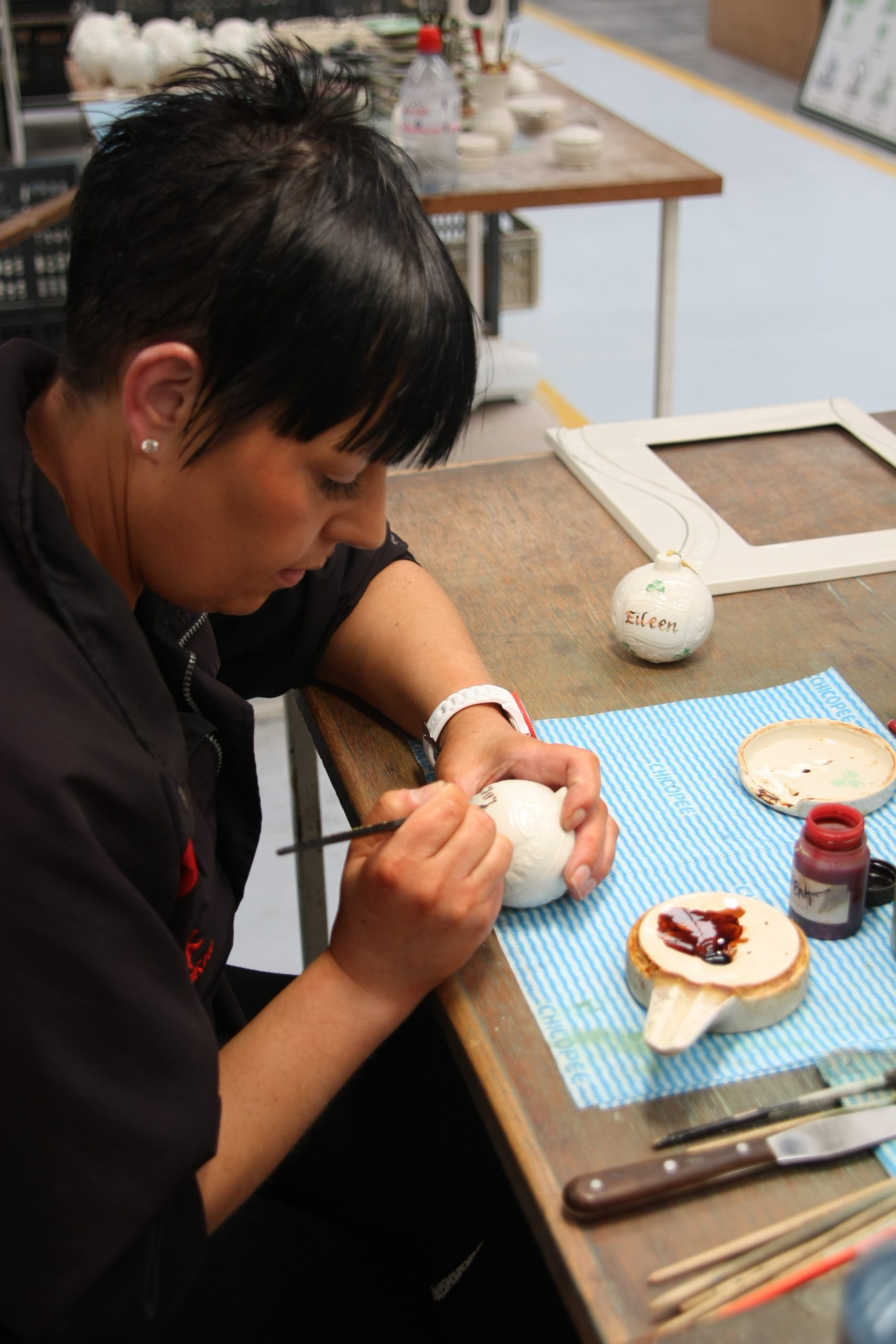
On leaving the kilns area our groups will be greeted by the fresh essence of the many paints and fat oils that are used each day in the adornment of many of the Belleek products. The varied shades of pastel colours are visible on the workbenches of the decoration staff as they apply colour with every careful brushstroke – you never know, you might even be asked to paint a little yourself!
And of course finally after having been decorated the china undergoes its third and final firing; the enamel firing, this time at 700 degrees centigrade for approximately seven hours. It will then receive a final quality inspection and packed into gift boxes in the warehouse.
Can’t wait for your tour? Shop Belleek Online
Sign up to our Mailing List
Keep up to date with the latest news from Belleek Pottery Visitor Centre